
Creative brief template: how to write one, and how to brief an integrated campaign
A creative brief tells an agency or creative team what you need, why you need it and how you’ll judge the result. The best briefs are short and specific: one business problem, one message, one measure of success.

In this guide
Most disappointing creative work starts with a weak brief: too many messages, no clear problem, a hidden budget. Fix the brief and the ideas get better, the feedback gets shorter, and the work is easier to judge.
This guide is from Tonic The Agency, an independent creative, digital and technology agency in Surry Hills, Sydney, since 2010, which has run campaigns and launches for LG, ASUS and Microsoft. It gives you a brief template to copy, and shows what changes when a campaign runs across several channels.
Definition
What is a creative brief?
A creative brief is a short document that turns a business problem into a task for a creative team. It covers the problem, the audience, one key message, the channels, the budget and how success will be measured.
At a glance
How to write a creative brief: six steps
- Start with the business problem
- Set the measure of success
- Know the audience
- Choose one message, with proof
- Give each channel a job
- Plan formats, budget and tracking
1 of 6
1. Start with the business problem
Say what needs to change in the business, not what you want made. Falling enquiries, a new market or a brand that no longer fits all give a creative team room to propose the right answer.
If the brief describes the solution, you’ll get that solution, and nothing better.
Ask: Could the team explain our business problem back to us?
2 of 6
2. Set the measure of success
Agree the result you want and the number you’ll judge it by: enquiries, sales, sign-ups or a shift in how people see you.
“More enquiries” becomes “enquiries up by a set amount by a set date”. Without a number, success becomes a matter of opinion.
Ask: What number will tell us the campaign worked?
3 of 6
3. Know the audience
Describe who you’re talking to, what they think now, and what you want them to think or do after seeing the work.
“Everyone aged 25 to 54” isn’t an audience. A specific person with a specific problem is.
Ask: What does our audience believe today that we need to change?
4 of 6
4. Choose one message, with proof
Pick the one thing the audience should take away, then give the facts that make it true. Three messages competing for attention usually means none of them land.
Tonic’s repositioning of Baracuda came down to one line, “For Everyday Aussie Pools”, which then carried the campaign and the website.
Ask: If people remember one thing, what should it be?
The template
The creative brief template
Copy these sections into a document and keep each answer short. If a section takes more than a paragraph, the thinking behind it probably isn’t finished.
| Compared on | What to write | Watch out for |
|---|---|---|
| 1. Background | The business, the market and what has changed | History nobody needs to act on |
| 2. The business problem | What needs to move: sales, leads, awareness or a perception | Describing the solution instead of the problem |
| 3. Objective and measure | The result you want and the number you’ll judge it by | Goals with no number attached |
| 4. Audience | Who they are, what they think now, what they should think or do | “Everyone aged 25 to 54” |
| 5. Key message | The one thing the audience should take away | Three messages competing |
| 6. Reasons to believe | The facts and proof behind the message | Claims you can’t back up |
| 7. Mandatories | Brand guidelines, legal lines, logos, partner requirements | Surprises after the idea is approved |
| 8. Channels and deliverables | Where the work runs and the formats needed | Formats with no channel job |
| 9. Budget and timing | A budget range, key dates and the in-market window | Keeping the budget secret |
| 10. Approvals | Who signs off, and how feedback is gathered | Too many approvers with equal votes |
5 of 6
5. Give each channel a job
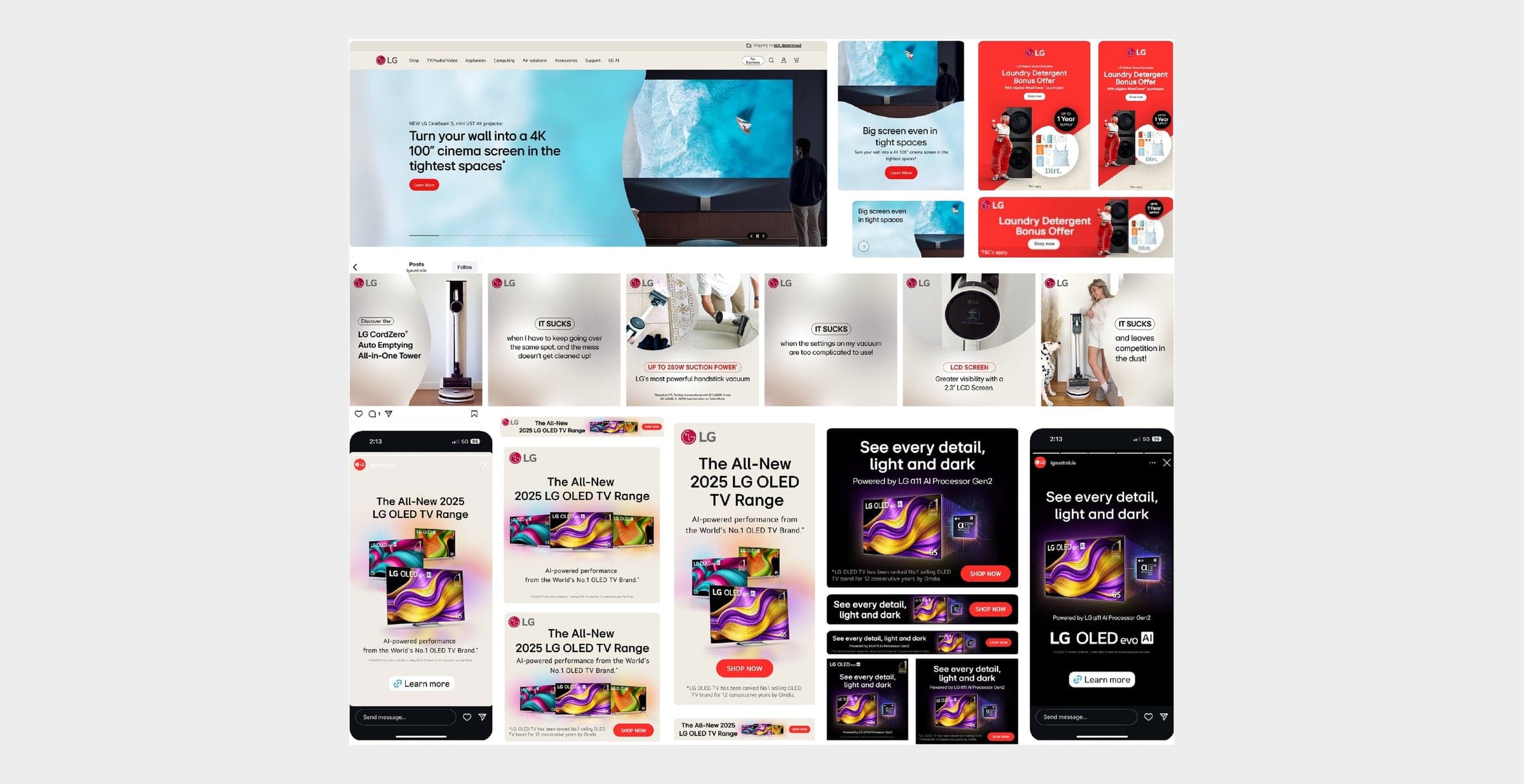
An integrated campaign runs one idea across every channel, so each touchpoint builds on the last. Agree the idea first, then give each channel a job: building awareness, explaining the offer, or turning interest into an enquiry or sale.
Tonic’s Baracuda work paired an integrated campaign, built around a typical Aussie family, with a website redesign that makes the right products easier to find.
Ask: What job does each channel do in this campaign?
6 of 6
6. Plan formats, budget and tracking
List every format up front: a hero film, social cut-downs, display ads, email and direct mail all need different sizes and lengths. Share a budget range, and set up tracking before launch so you can see which channels carry the result.
Filming and photography for Tonic’s campaigns are done with trusted production partners, so flag shoots early in the brief.
Ask: Have we listed every format, and how we’ll measure each channel?
Checklist
Creative brief checklist
Before you send the brief
- One business problem, in a sentence
- A measure of success with a number
- A specific audience
- One key message, with proof
- Mandatories listed: brand guidelines, legal lines, logos
- Channels and formats listed
- Budget range and key dates
- Approvers named, with one final decision-maker

Frequently asked questions
What makes a good creative brief?
One clear business problem, one audience, one message with proof, a measure of success with a number, and a budget range. Good briefs are short, specific and agreed by the people who will approve the work, so every idea can be judged against them.
How long should a creative brief be?
Usually one or two pages. If it runs longer, the thinking probably isn’t finished. Background can go in an appendix; the brief itself should be quick to read and easy to check ideas against.
Who writes the creative brief, the client or the agency?
The client usually writes the first version, because it owns the business problem. A good agency then challenges and sharpens it with you, so both sides agree on the brief before any ideas are shown.
What’s the difference between a creative brief and a marketing brief?
A marketing brief sets the business and marketing goals. A creative brief turns those goals into a task for the creative team: one audience, one message, the channels and the formats.
What is an integrated marketing campaign?
A campaign that runs one idea and message across several channels, such as video, social, search, email, the website and direct mail, with each channel given a clear job and the results measured together.
Should we include the budget in the brief?
Yes, at least as a range. It lets the team suggest ideas you can afford and plan production properly. Leaving it out usually means rework when the first ideas come back.
Guides. Further reading
Thinking it through? Start here.
 Guide · Working with agencies
How to choose a marketing agency
Six things to get right before you hire a marketing agency.Read the guide Guide · Branding
Brand guidelines template: what to include, with real examples
Every section to include, with lessons from real rebrands.Read the guide Guide · Lead generation
B2B marketing strategy: a practical plan for winning business customers
Six steps from the commercial goal to measuring pipeline.Read the guide
Work with us
Talk to Tonic
Got a brief, or half of one? Send it to us and we’ll talk it through with you.