
B2B marketing strategy: a practical plan for winning business customers
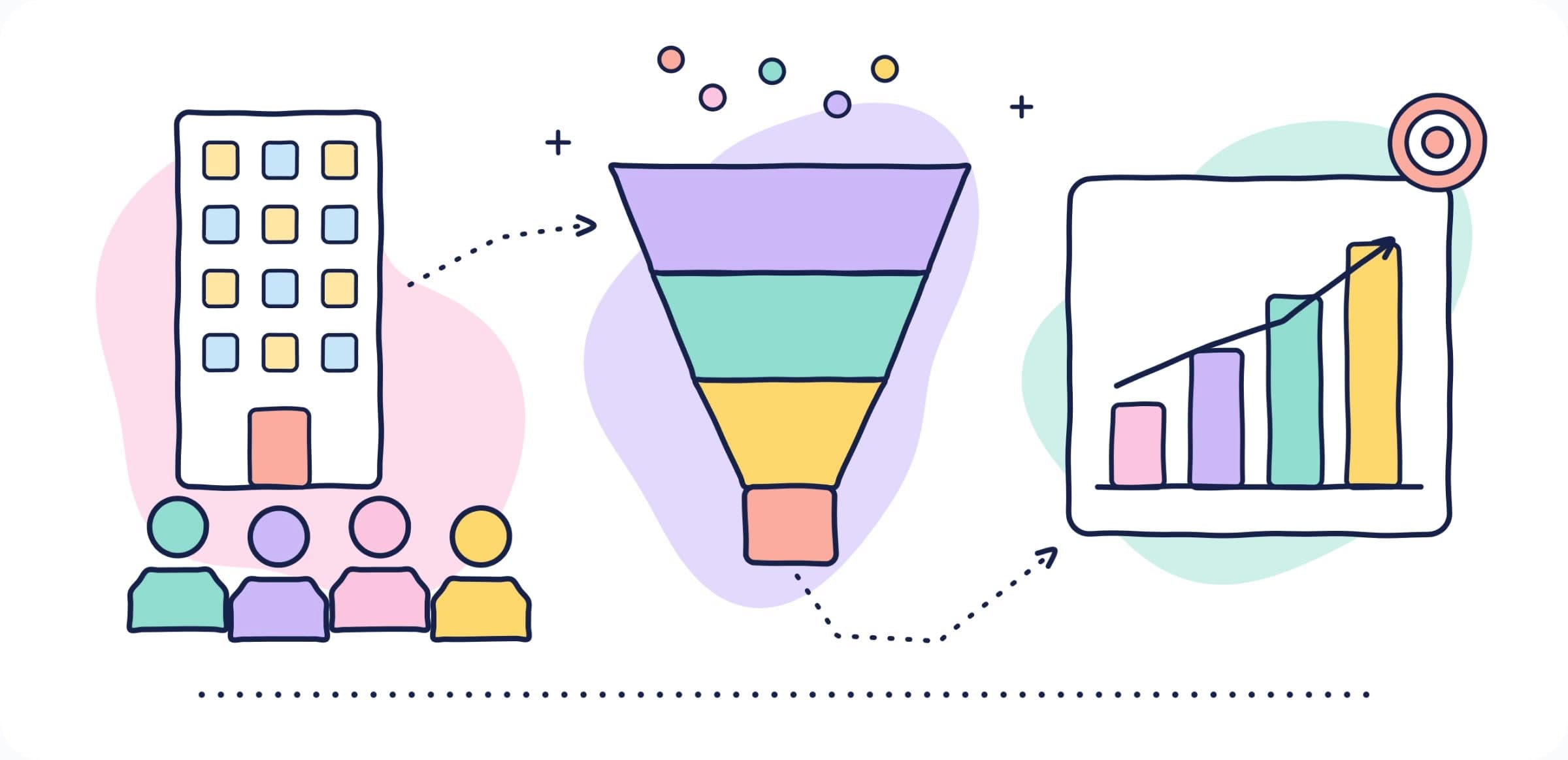
A B2B marketing strategy sets out who buys from you, what they need to believe, which channels reach them and how a lead becomes a customer. The strongest plans start from a commercial goal, focus on the whole buying group and measure pipeline, not clicks.
In this guide
- How B2B buying is different
- Start with the commercial goal
- Define the buying group
- Build the proposition and proof
- Choose channels for each stage
- Channels in practice
- Making direct mail work
- Nurture with automation
- Measure pipeline, not clicks
- Four automations to set up first
- Frequently asked questions
- Talk to Tonic
B2B marketing differs from consumer marketing because several people decide, the purchase takes longer and the relationship carries on after the sale. The plan below runs in six steps.
This guide is from Tonic The Agency, an independent creative, digital and technology agency in Surry Hills, Sydney, since 2010, with B2B experience across education, small business, mid-market and enterprise. Tonic has run B2B campaigns for Microsoft and Oracle NetSuite, and integrates, sets up and manages HubSpot, Salesforce Marketing Cloud and Marketo.
Definition
What is a B2B marketing strategy?
A B2B marketing strategy is a plan for how a business wins and keeps business customers. It covers the commercial goal, the target accounts and buying group, the proposition and proof, the channels for each stage, lead nurturing and how results are measured.
At a glance
How to build a B2B marketing strategy: six steps
- Start with the commercial goal
- Define the accounts and the buying group
- Build the proposition and the proof
- Choose channels for each stage
- Nurture with marketing automation
- Measure pipeline, not clicks
The difference
How B2B buying is different
Business buyers decide as a group, take longer and need proof. That changes the channels, the content and how you measure success.
| Compared on | Business buyers | Consumers |
|---|---|---|
| Who decides | A group: users, budget holders, technical and procurement | Usually one person or a household |
| How long it takes | Longer, in several stages | Often quick |
| What wins | Proof, lower risk and a clear return | Appeal, convenience and price |
| Where they look | Search, peers, LinkedIn, industry press and events | Social, search and retail |
| After the sale | Renewal and growing the account | Repeat purchase |
1 of 6
1. Start with the commercial goal
Work backwards from revenue. Agree with sales how much new business you need, how much pipeline that takes, and how many qualified leads fill it.
That number, not a reach or traffic target, is what marketing is there to move.
Ask: How many qualified leads do we need to hit our revenue target?
2 of 6
2. Define the accounts and the buying group
Describe the companies you want: industry, size, location and the problems that make them a fit. Then list the people in the buying group and what each one needs to hear.
The person who uses your service and the person who signs the contract rarely ask the same questions.
The buying group also changes with the size of the customer. Tonic has run B2B marketing for education, small business, mid-market and enterprise clients: a small business owner may decide alone, while an enterprise deal can involve users, IT, finance and procurement.
Ask: Who signs the contract, and what do they need to hear?
3 of 6
3. Build the proposition and the proof
Say plainly why a customer should choose you over the alternatives, including doing nothing. Back it with proof: case studies, results, client names and reviews.
Business buyers are reducing risk, so evidence outweighs adjectives.
Ask: Why would a customer choose us over doing nothing?
4 of 6
4. Choose channels for each stage
Give each channel a job. Search and LinkedIn find people who are already looking. Guides and articles help them understand the problem. Email, direct mail and events move them closer. For a short list of high-value accounts, an account-based approach puts tailored content in front of each buying group.
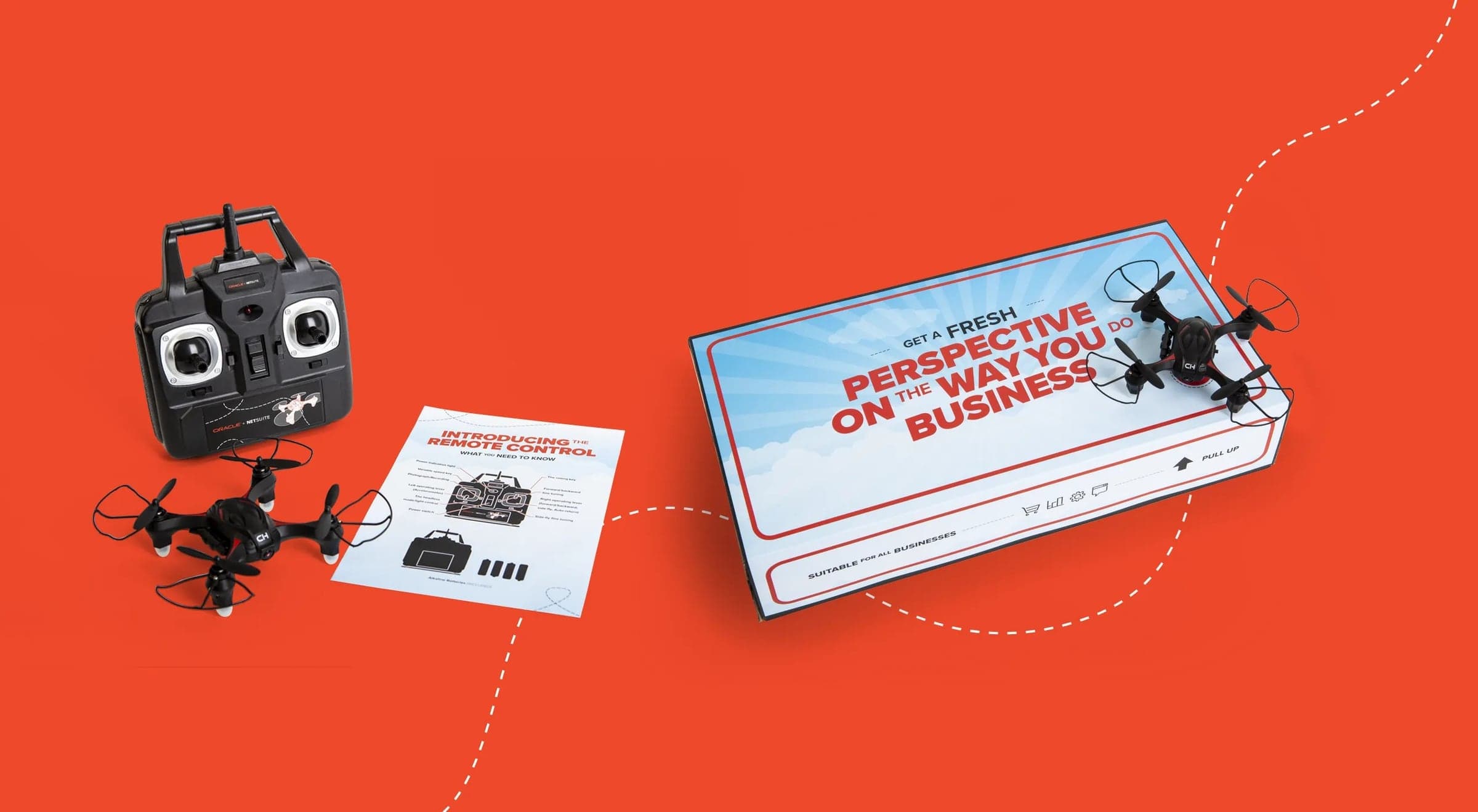
Tonic’s campaigns for Microsoft (Get Mobile) and Oracle NetSuite both used direct mail to reach business buyers; the direct mail section below covers what makes it work.
Ask: What job does each channel do?
In practice
Channels, nurturing and measurement in practice
Each stage of the buying journey needs different channels and a different measure of success.
| Compared on | Channels that do the work | What to measure |
|---|---|---|
| Find people who are looking | Google search (SEO and ads), LinkedIn ads | Qualified visits and enquiries |
| Help them understand the problem | Guides, case studies, webinars, industry press | Return visits, content downloads |
| Move them closer | Email nurture, direct mail, events, retargeting | Leads scored as sales-ready |
| Win the deal | Sales follow-up, proposals, references | Opportunities and wins |
| Grow the account | Customer email, account reviews, new offers | Renewals and repeat revenue |
Direct mail
Making B2B direct mail work
Direct mail works in B2B when it’s the start of a sales conversation, not a one-off send. Three things make the difference.
- A qualified list – send to named people at accounts you’ve already chosen. Every pack should go to someone sales would be glad to speak to.
- Tracked delivery – send by Australia Post registered post, so you know when each pack has arrived and who signed for it.
- Timed follow-up – call while the pack is still on the desk. For Oracle NetSuite, packs went out in waves: sent on a Monday, then a sales ‘war room’ on the Friday, where reps called the people who’d received one.
Ask: Who will call each recipient, and when?
5 of 6
5. Nurture with marketing automation
Most leads aren’t ready to talk to sales on day one. Marketing automation sends each lead useful content based on what they do, scores their interest, and hands them to sales at the right moment.
Tonic integrates, sets up, configures and manages HubSpot, Salesforce Marketing Cloud and Marketo. LG and De’Longhi run Salesforce Marketing Cloud, and VanEck runs Marketo.
Ask: What happens to a lead who isn’t ready to buy yet?
6 of 6
6. Measure pipeline, not clicks
Track each stage: leads, qualified leads, opportunities, wins and revenue. Connect your website forms, ads and CRM so you can see which channels produce customers, not just clicks.
Review the numbers with sales every month and move budget towards what works.
Ask: Which channels produced customers last quarter?
Examples
Four automations to set up first
- Welcome journey – a short series of emails that introduces your services after someone downloads a guide.
- Lead scoring – points for visiting pricing or case study pages, so sales calls the warmest leads first.
- Passing leads to sales – an alert and a task in the CRM when a lead crosses the score threshold.
- Re-engagement – a nudge to contacts who’ve gone quiet, with something new and useful.
AI helps with research, personalisation and lead scoring, but it works best with people checking the output. We use it every day, and we build with it when off-the-shelf tools fall short.
For more journeys and how to make them pay off, see the marketing automation guide.
Lead generation work.

Frequently asked questions
What is an example of B2B marketing?
Microsoft’s Get Mobile campaign, run by Tonic, is one: a direct mail campaign aimed at business buyers. Oracle NetSuite’s direct mail went out in waves, with sales calling recipients the same week. Other common examples are LinkedIn ads aimed at target accounts, webinars and email programs that score leads for sales.
How is B2B marketing different from B2C?
B2B purchases involve several decision-makers, take longer and depend on proof and lower risk. Consumer purchases are usually quicker and made by one person. B2B marketing also continues after the sale, through renewals and account growth.
What should a B2B marketing plan include?
Six things: a commercial goal, the accounts and buying group you’re targeting, a proposition with proof, channels chosen for each buying stage, nurturing with marketing automation, and measures tied to pipeline and revenue rather than clicks.
How long does B2B marketing take to show results?
Longer than consumer marketing, because buying cycles are longer. Track early signals, such as qualified enquiries and engaged accounts, while you wait for pipeline and revenue to follow.
What is marketing automation in B2B?
Software such as HubSpot, Salesforce Marketing Cloud or Marketo that sends leads relevant content based on their behaviour, scores their interest and passes them to sales when they’re ready. Our marketing automation guide covers how to make it pay off.
Should marketing and sales share targets?
Yes. A shared pipeline target, and an agreed definition of a qualified lead, stop the two teams working against each other and make it clear which marketing activity produces customers.
What is account-based marketing (ABM)?
Account-based marketing (ABM) is a B2B approach where sales and marketing agree a short list of target companies, map the people in each buying group, and tailor content and outreach to them. It suits businesses with a few high-value prospects. Targeted direct mail to named contacts, followed by a sales call, is a common ABM tactic.
Guides. Further reading
Thinking it through? Start here.
 Guide · Lead generation
B2B lead generation: how to get leads that turn into sales
How to get B2B leads that turn into sales, not just form fills.Read the guide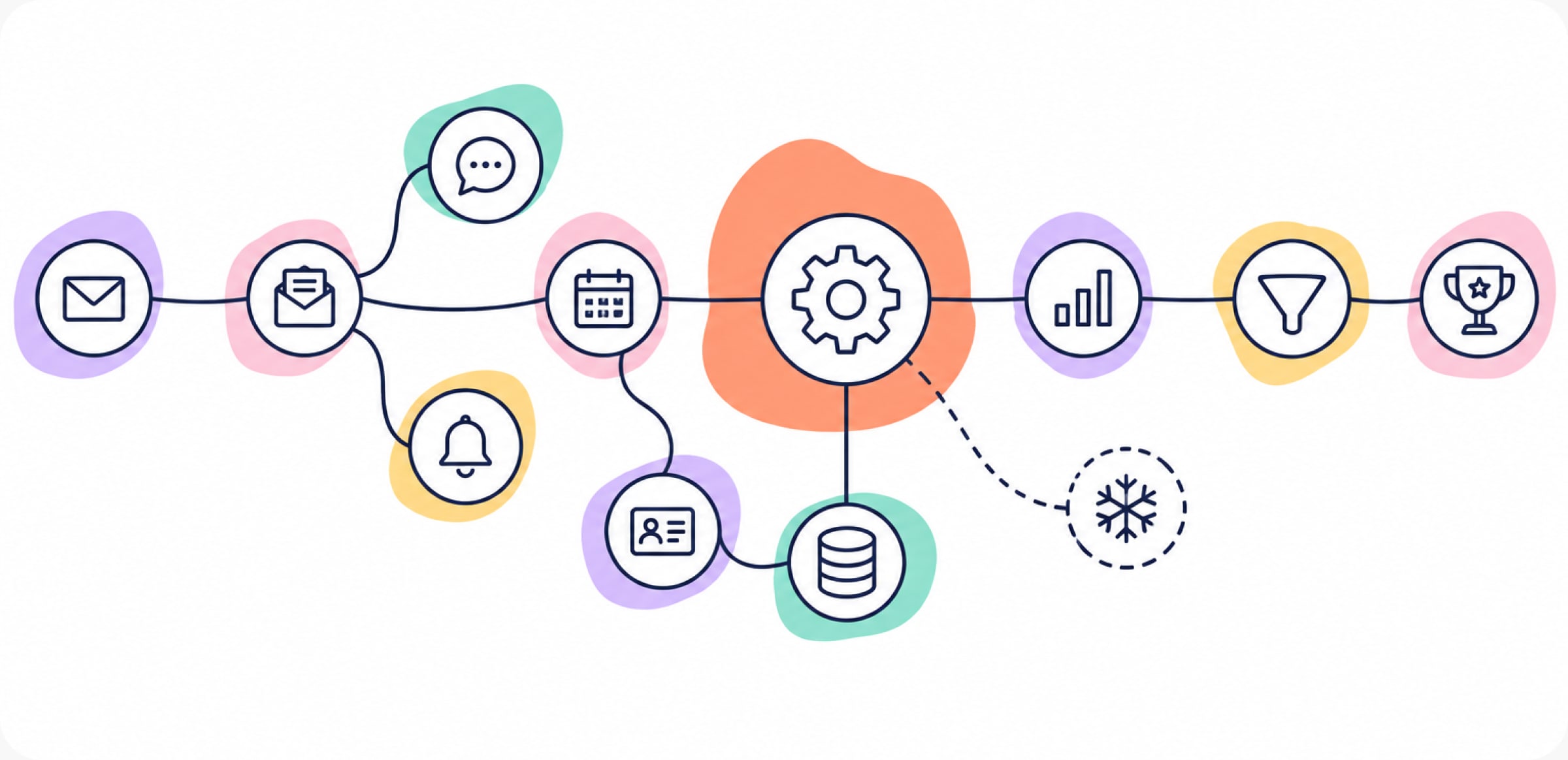 Guide · Marketing automation
Marketing automation: how to make your platform pay off
Six things that make Salesforce Marketing Cloud, Marketo or HubSpot pay off.Read the guide Guide · Working with agencies
Creative brief template: how to write one, and how to brief an integrated campaign
A template to copy, and what changes when a campaign runs across channels.Read the guide
Work with us
Talk to Tonic
Planning next year’s B2B marketing? Send us your brief and we’ll show you where we’d start.