
Why most marketing teams don’t get results from AI – and what the 6% do differently
Nearly every marketing team now uses AI, but Bain’s 2026 research found only 6% see significant results. The leaders aren’t using better tools – they set AI strategy from the top, redesign how work gets done and build AI into the platforms they already run.

In this guide
Most marketing teams treat AI as a tool they add to existing workflows. The few who see real results change how their marketing works around it – from strategy down to team structure – and connect it to the platforms and customer data they already own.
This guide is from Tonic The Agency, a full service independent agency in Surry Hills, Sydney, since 2010, working with brands including LG Electronics Australia and New Zealand, ASUS, VanEck and CanToo. It sets out why AI in marketing so often stalls, and what the leading teams do differently.
Definition
Why don’t most AI marketing investments pay off?
Because most teams add AI tools to old workflows instead of changing how work gets done. Bain’s 2026 research found only 6% of marketing organisations see significant results. The leaders set AI strategy from the top, redesign workflows around it and build it into the platforms and data they already use.
The numbers
Nearly every team uses AI. Only 6% see real results.
Bain’s 2026 survey of 1,397 CMOs, CFOs and senior marketing and finance executives found a wide gap between AI adoption and AI impact. Leaders – companies growing revenue more than 11% a year and gaining market share – are pulling away from everyone else.
- 6%
- of marketing organisations say AI delivers significant performance impact today (Bain)
- 2×
- Leaders are twice as likely to attribute double-digit revenue growth or cost savings to AI (Bain)
- 47%
- of leaders describe AI as a core capability, against 30% of laggards (Bain)
- 3.7×
- Leaders are 3.7 times more likely to fully redesign workflows around AI (Bain)
Separately, Ahrefs’ 2026 survey of 301 marketers found only 2.7% trust AI-generated content without a person reviewing it first – a reminder that tools are only as good as the expertise behind them.
At a glance
AI in marketing: three reasons teams stall, three things the 6% do
- Why teams stall: too many tools, no strategy
- Why teams stall: pilots that never scale
- Why teams stall: no workflow redesign
- What the 6% do: centralise strategy
- What the 6% do: embed AI in existing platforms
- What the 6% do: test at scale
1 of 6
Why teams stall: too many tools, no strategy
AI has spread team by team, subscription by subscription, with no central plan. Bain found leaders are 1.8× more likely to follow a centralised AI roadmap with priorities set from the top.
Without one, teams run duplicate tools and can’t connect what AI produces to business results.
Ask: Who owns AI strategy in our marketing team?
2 of 6
Why teams stall: pilots that never scale
A chatbot demo is easy. Connecting AI to your CRM, marketing automation platform and customer data – securely, without breaking what already works – is where most projects stall.
Bain found 16% of laggards rely on general-purpose tools such as ChatGPT, Copilot or Gemini, against just 6% of leaders.
Ask: Which of our AI tools are connected to our real data and platforms?
3 of 6
Why teams stall: no workflow redesign
Layering AI over old processes produces marginal gains. Bain found leaders are 3.7× more likely to fully redesign workflows, and twice as likely to restructure teams and job descriptions around AI.
That means changing who does what, which skills matter and how performance is measured – not just adding a tool to the stack.
Ask: Have we redesigned any workflow around AI, or only added AI to old ones?
4 of 6
What the 6% do: centralise strategy
In leading organisations, AI priorities are set at executive level, not left to individual teams. Bain found more than 40% of leaders put 11% or more of their budget into AI, compared with only a quarter of laggards.
The goal is alignment: every AI initiative connects to a business outcome. Tonic’s AI consulting starts with an audit of where AI touches your marketing today and where the gaps are.
Ask: Does every AI project we run have an owner and a business measure?
5 of 6
What the 6% do: embed AI in existing platforms
Bain found leaders are 2.4× more likely to embed AI directly into their marketing tools – CRM, marketing automation, analytics – rather than running it separately.
For most teams that means using the AI already inside platforms such as HubSpot, Salesforce Marketing Cloud, Marketo and AEM, connected to first-party data. Larger changes are often part of a wider digital transformation.
Ask: Which AI features in our existing platforms are we not using yet?
6 of 6
What the 6% do: test at scale
Bain found leaders are 8.5× more likely to run 100 or more marketing experiments a month. AI embedded in real workflows, tested against real outcomes, is what moves results.
Testing also keeps quality in check: Ahrefs found 89% of marketers now manually check AI content, up from 80% in 2025.
Ask: What would good look like in 12 months, and how would we measure it?
Frequently asked questions
Why does nearly every marketing team use AI but only 6% see results?
Adoption measures access to tools. Results need redesigned workflows, AI connected to real platforms and data, and the skills to run it at scale. Most organisations do the first without the second (Bain, 2026).
What do the 6% of marketing teams do differently with AI?
Bain found three things: a central AI strategy set at executive level; workflows fully redesigned around AI rather than AI added to old processes; and AI built into the marketing platforms they already use, tested continuously against business outcomes.
Do better AI tools close the gap?
Not on their own. Leaders rely less on general-purpose tools like ChatGPT or Copilot (6% vs 16% of laggards). The difference is integration – AI inside the CRM, automation and analytics tools teams already run on, connected to first-party data.
How much should a marketing team invest in AI?
More than 40% of Bain’s leaders put at least 11% of their budget into AI. But how that money connects to strategy and workflow redesign matters more than the amount.
Does AI reduce the size of marketing teams?
Not simply. Bain found leaders are twice as likely to restructure teams and job descriptions around AI, and more likely to expect a greater share of generalists than specialists – people who coordinate human and AI work across a whole workflow. Leaner teams come after a full redesign, not just new tools.
Guides. Further reading
Thinking it through? Start here.
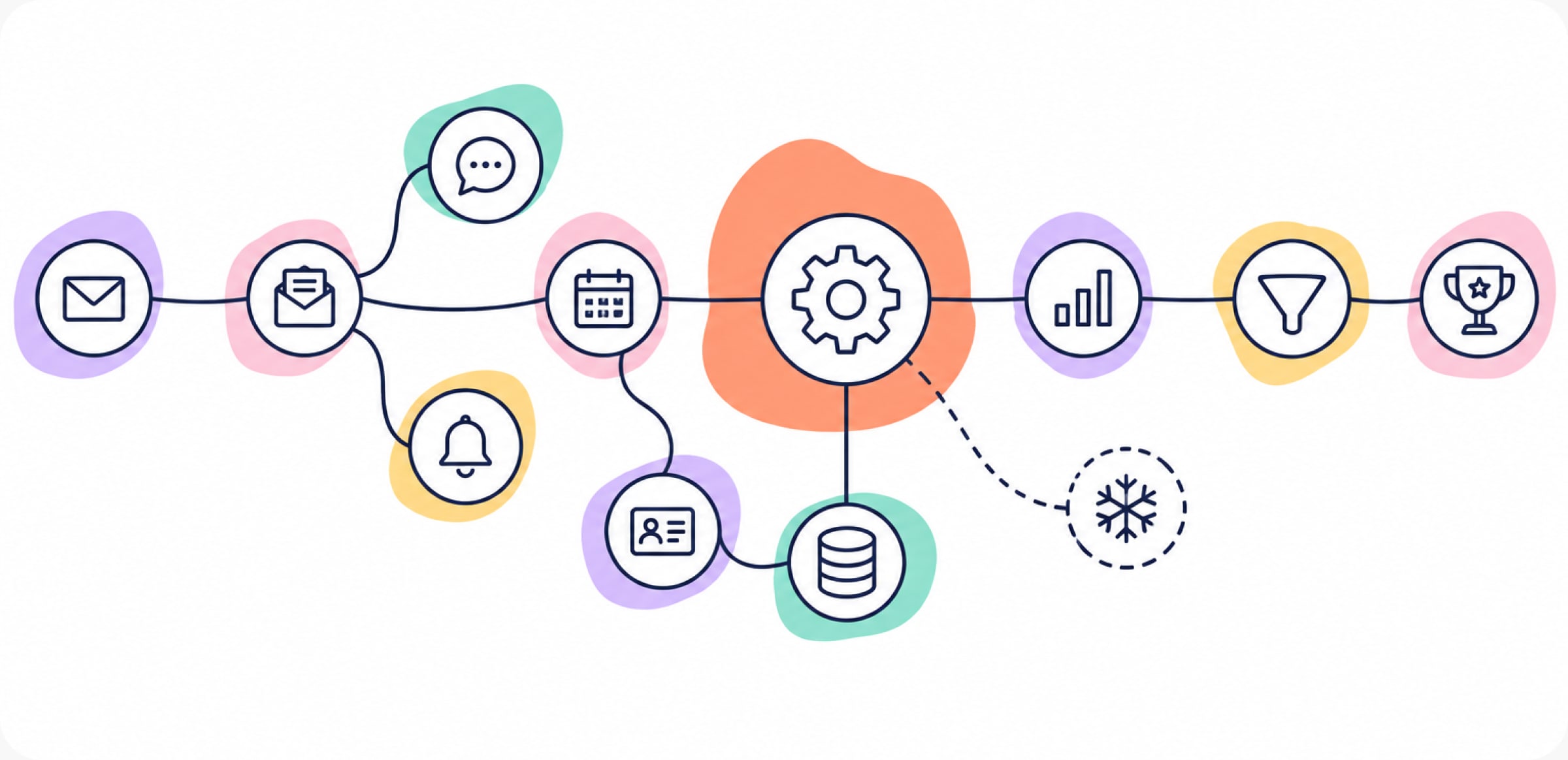 Guide · Marketing automation
Marketing automation: how to make your platform pay off
Six things that make Salesforce Marketing Cloud, Marketo or HubSpot pay off.Read the guide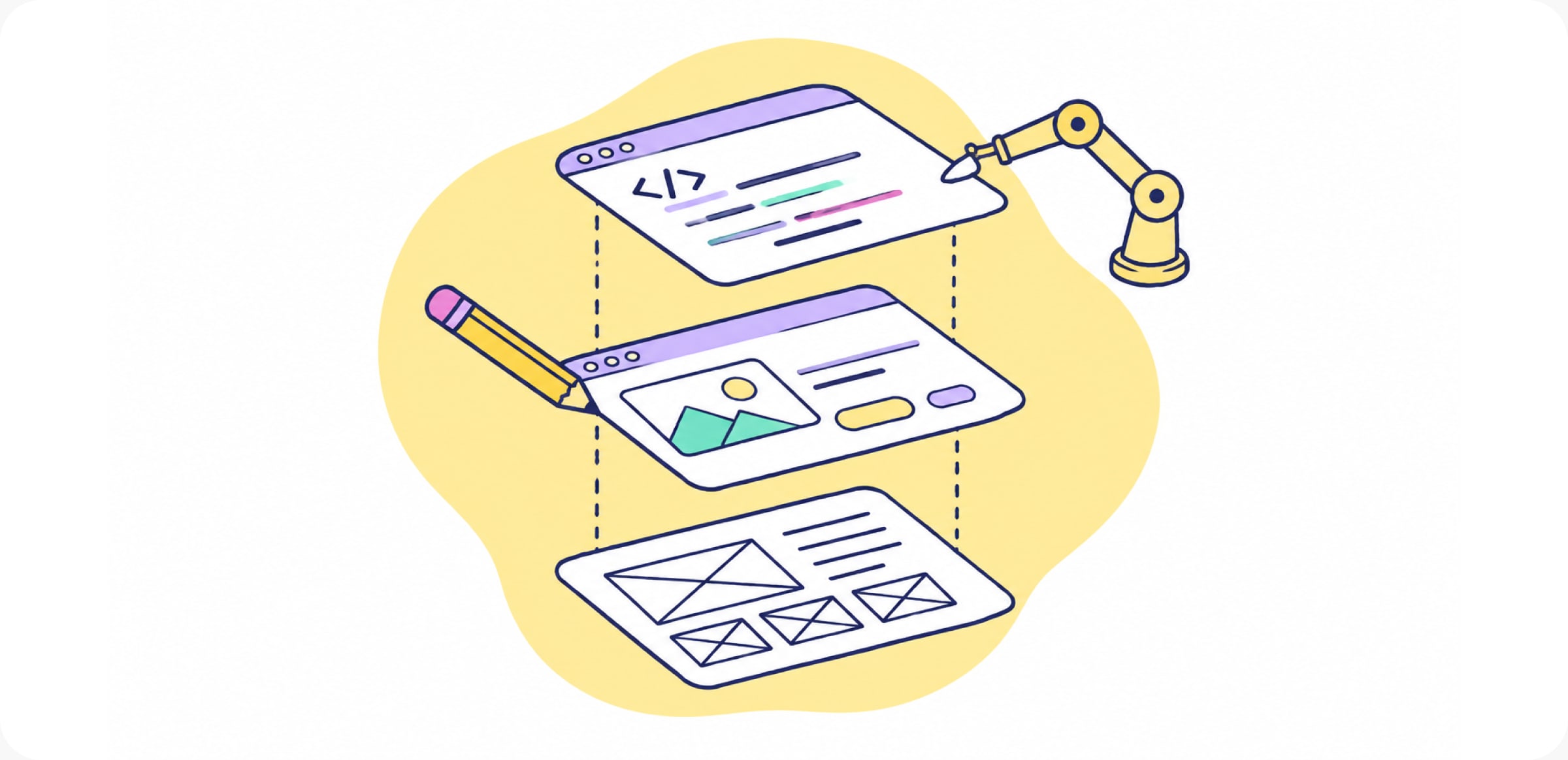 Guide · AI
AI in web design and development: where it helps and how to use it well
Where AI helps in a website project, and where people still decide.Read the guide Guide · SEO and GEO
AI search visibility: how to get your brand recommended by AI
Six things AI assistants look for when they recommend a brand.Read the guide
Work with us
Talk to Tonic
Tonic The Agency is a full service independent agency in Surry Hills, Sydney, since 2010. Our AI consulting starts with where AI touches your marketing today, then redesigns the workflows that matter most around the platforms and data you already have. Every recommendation is set by senior specialists – AI helps them move faster, it doesn’t replace their judgement.